Proper Posture
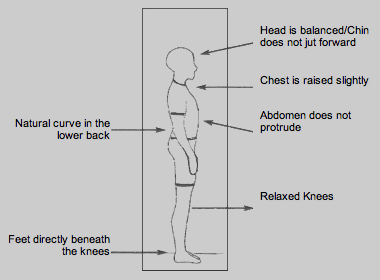
Having correct posture means keeping each part of the body in alignment with the neighboring parts. Proper posture keeps all parts balanced and supported so the pull of gravity is evenly distributed.
Good posture includes:
- A straight line from your ears, shoulders, hips, knees and ankles
- Head is centered
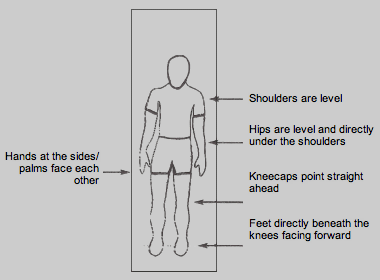
- Shoulders, hips and knees are of equal height
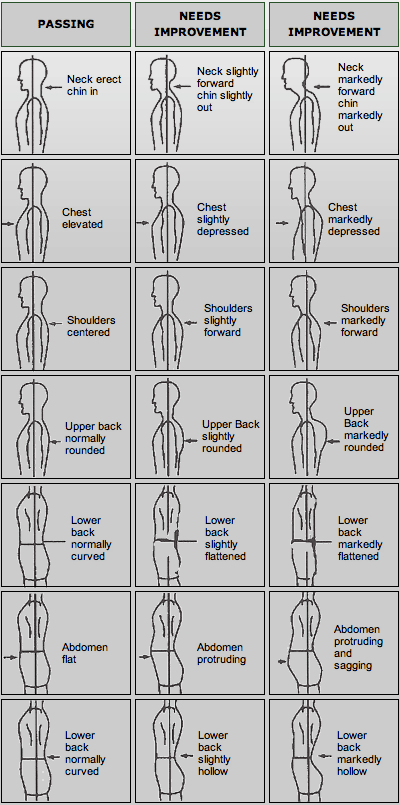
Some of the most common examples of poor posture includes:
- forward head
- rounded shoulders
- arched lower back
- excessive anterior pelvic tilt (protruding backside)
- excessive posterior pelvic tilt (protruding abdomen/pelvis)
Stand facing a full length mirror and check to see if:
- Your head is straight
- Your shoulders are level
- Your hips are level
- Your kneecaps face the front
- Your ankles are straight
Now look at yourself from the side (or have someone else check you out) and look for the following:
- Your head is straight rather than slumped forwards or backwards
- Chin is parallel to the floor
- Shoulders are in line with ears
- Knees are straight
- Slight forward curve to your lower back